Artificial intelligence has crossed a new threshold
Claude AI Agents are changing how we build intelligent software systems Artificial intelligence has crossed a new threshold. It’s no longer just about chatbo


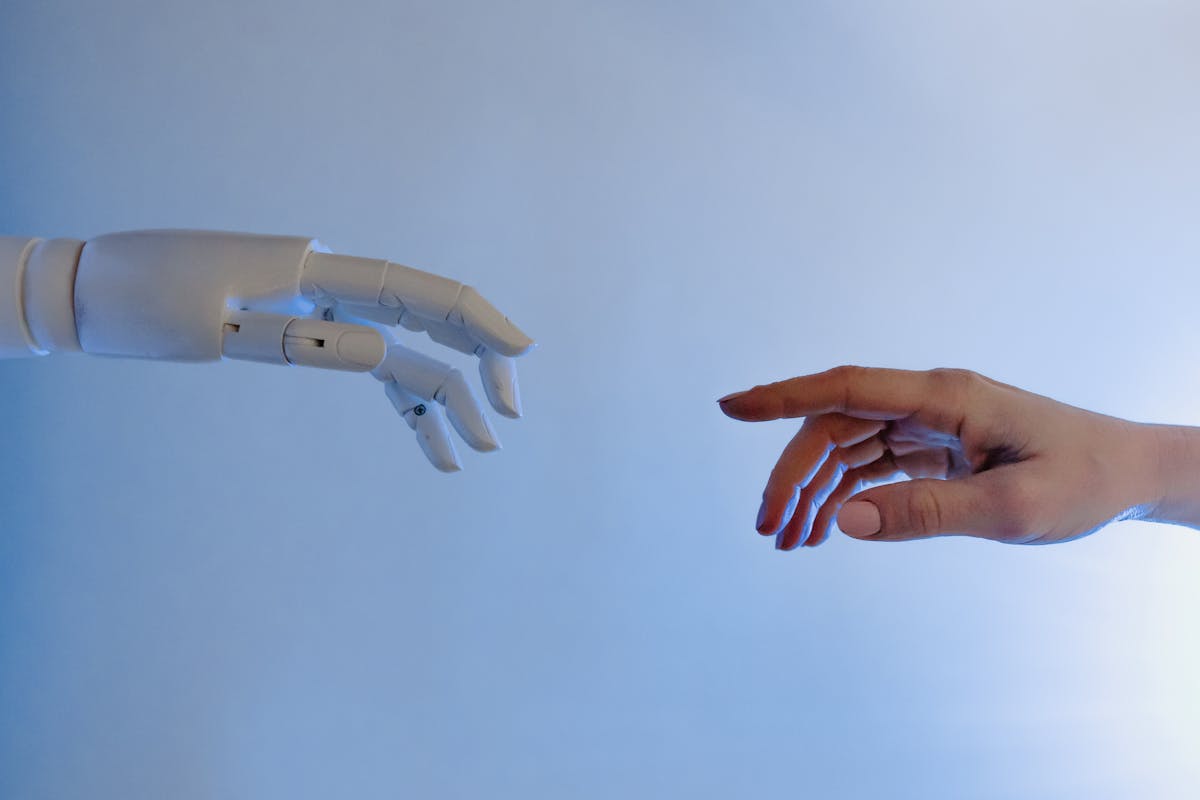
Artificial intelligence has crossed a new threshold. It’s no longer just about chatbots that answer questions or models that summarize text — today’s AI systems can plan, act, and adapt in real time. At the center of this shift is the rise of the AI agent, and Claude, Anthropic’s flagship large language model, is fast becoming one of the most capable foundations for building them.
Whether you’re a developer curious about agentic architectures, a business owner exploring AI automation, or just someone keeping up with the state of the art, this guide breaks down everything you need to know about Claude agents — what they are, how they work, and why they matter.
What Is an AI Agent?
Before diving into Claude specifically, let’s establish what we mean by an “AI agent.” Unlike a standard LLM that takes a prompt and returns a response, an AI agent is a system that:
- Perceives its environment (via tools, APIs, or data sources)
- Reasons about what actions to take
- Executes those actions autonomously
- Reflects on results and adjusts its next steps
Think of the difference between asking a calculator “what is 12 × 47?” versus hiring an accountant who can gather your financial data, identify patterns, run calculations, flag anomalies, and deliver a report — without you micromanaging every step. That’s the leap from a language model to an agent.
Who Is Claude? A Quick LLM Primer
Claude is a family of large language models developed by Anthropic, an AI safety company founded in 2021. The current generation — Claude 3.5 and Claude 4 — includes models optimized for different use cases:
- Claude Haiku — Fast, lightweight, ideal for high-volume tasks
- Claude Sonnet — Balanced performance and speed, great for production agents
- Claude Opus — Maximum reasoning depth, best for complex multi-step problems
What sets Claude apart from other frontier models is Anthropic’s emphasis on Constitutional AI — a training methodology designed to make Claude more honest, harmless, and helpful. For agentic applications where the model operates with reduced human oversight, this safety-first design philosophy becomes critically important.
How Claude Powers AI Agents
Claude becomes an agent when it’s given tools — functions it can call to interact with the outside world. These tools might include:
- Web search APIs
- Code execution environments
- Database query interfaces
- File system access
- Calendar and email integrations
- Custom business logic APIs
The agent loop works like this: Claude receives a goal, generates a plan, calls a tool, observes the result, updates its reasoning, and continues — iterating until the task is complete or it determines it can’t proceed. This think → act → observe cycle is the heartbeat of any agentic system.

The Tool Use API: Claude’s Interface to the World
Anthropic’s Tool Use API (also called function calling) is what makes Claude’s agentic capabilities concrete. You define a set of tools in JSON schema format, and Claude intelligently decides when and how to call them based on the user’s request.
Here’s a simple conceptual example. You give Claude three tools: search_web, read_url, and summarize_text. Then you ask it: “What are the top three trends in AI for 2025?”
Claude will:
- Call
search_web("AI trends 2025") - Call
read_url()on the most relevant results - Call
summarize_text()to distill the findings - Return a structured, grounded answer
This is vastly more powerful than prompt engineering alone — and it’s the foundation of every real-world Claude agent deployment.
Multi-Agent Architectures: When One Claude Isn’t Enough
Some tasks are too complex for a single agent to handle reliably. This has given rise to multi-agent systems, where multiple Claude instances (or Claude working alongside other models) collaborate on a shared objective.
A common pattern is the orchestrator-subagent model:
- An orchestrator agent breaks a high-level goal into sub-tasks and assigns them
- Subagents execute specific tasks (research, coding, writing, QA) and return results
- The orchestrator synthesizes outputs into a final deliverable
Anthropic’s own Claude Code product uses this architecture — a terminal-based coding agent where Claude orchestrates its own subprocesses, runs shell commands, reads and writes files, and iterates on code until a task is complete.

Real-World Claude Agent Use Cases
Agentic AI is no longer a research curiosity — it’s being deployed in production across industries. Here are some of the most compelling use cases powered by Claude:
1. Software Development Automation
Claude agents can read a GitHub issue, explore a codebase, write a fix, run tests, and open a pull request — with minimal human intervention. Companies are using this to reduce engineering bottlenecks and accelerate shipping cycles.
2. SEO and Content Operations
Content teams are deploying Claude agents to analyze Google Search Console data, identify low-performing pages, rewrite articles with targeted keywords, and publish directly to WordPress via the REST API. The agent handles the full content lifecycle end-to-end.
3. Customer Support Triage
Rather than routing every ticket to a human, Claude agents can read incoming support messages, query a knowledge base, attempt resolution, escalate when needed, and draft personalized replies — all in seconds.
4. Research and Competitive Intelligence
Claude agents can be tasked with monitoring competitor websites, summarizing new content, flagging pricing changes, and delivering weekly briefings — automating work that would otherwise take hours of manual browsing.
5. Data Analysis Pipelines
With access to SQL tools and Python execution environments, Claude can write queries, analyze results, identify anomalies, generate visualizations, and produce natural-language reports from raw business data.
Prompt Engineering for Claude Agents
Getting the most out of Claude as an agent requires more than just giving it tools. System prompt design is critical. Some best practices:
- Be explicit about the agent’s role and scope — Claude performs better when it knows what kind of agent it is and what it’s not supposed to do
- Define tool usage guidelines — Tell Claude when it should prefer one tool over another
- Add chain-of-thought instructions — Prompting Claude to “think step by step before acting” reduces errors in multi-step tasks
- Set output format expectations — Structured JSON output from subagents makes orchestration far easier
- Include error handling instructions — Tell Claude what to do when a tool fails or returns unexpected data

Safety and Reliability: Anthropic’s Edge
One of the biggest concerns with autonomous agents is the alignment problem — what happens when an agent takes an action you didn’t intend? Anthropic has built several safeguards into Claude that make it better suited for agentic deployment than many alternatives:
- Minimal footprint principle — Claude is trained to request only necessary permissions and prefer reversible actions
- Uncertainty flagging — Claude will pause and ask for clarification rather than guessing when stakes are high
- Constitutional alignment — Core values are baked into the model, not just enforced via guardrails
- Auditability — Claude’s reasoning is typically transparent, making it easier to debug when something goes wrong
For production deployments handling sensitive data or high-impact workflows, these characteristics are not just nice-to-haves — they’re requirements.
Getting Started: Building Your First Claude Agent
If you want to experiment with Claude agents, the barrier to entry is lower than you might think. Here’s the minimal stack to get started:
- Anthropic API key — Sign up at console.anthropic.com
- Model selection — Start with
claude-sonnet-4-5for a balance of speed and capability - Tool definitions — Define 2–3 simple tools (e.g., web search + text file reader)
- Agent loop — Implement the think → act → observe cycle in ~50 lines of Python or TypeScript
- Iterate — Run real tasks, observe failures, improve your system prompt
Frameworks like LangChain, CrewAI, and Anthropic’s own Model Context Protocol (MCP) can accelerate this further by providing pre-built tool integrations and orchestration patterns.
The Future of Claude Agents
We are at the very beginning of the agentic AI era. As models become more capable and context windows grow larger, agents will handle increasingly complex, long-horizon tasks. The combination of Claude’s reasoning depth, Anthropic’s safety research, and the expanding ecosystem of tools and integrations positions Claude as one of the most promising foundations for the next generation of AI-powered software.
The question is no longer whether AI agents will transform how we work — it’s how quickly, and whether the teams building them will do so responsibly.
If you’re building something with Claude agents — or just getting started — the best time to dive in is now.
Found this article helpful? Share it with your team or drop a comment below with how you’re using Claude agents in your projects.
Related posts

Uncategorized
5 Colorful Towns in Portugal You Must Visit
June 1, 2026 · 29 min read
Discover 5 colorful towns in Portugal hidden from tourist crowds. From Monsaraz to Piódão, explore vibrant villages with authentic local charm. Plan your trip now!
Read more →
Uncategorized
7 safest caribbean islands
June 1, 2026 · 27 min read
Discover the 7 safest Caribbean islands with crime data, hurricane risk, and traveler-specific tips. Plan your secure vacation with confidence today!
Read more →
Uncategorized
Italy travel guide for families with kids
May 29, 2026 · 13 min read
Traveling to Italy with children? Get expert tips on kid-approved attractions, stroller-friendly routes, and family hotels. Make unforgettable memories!
Read more →